India Power Generation Capacity – Till Oct,2024
India is one of the fastest growing economy in the world. To sustain the economic growth it’s natural that power sector has to grow at a rapid pace. A significant stride has been shown in India power generation capacity augmentation in the last decade. In this article, we will discuss different energy sources being used for power generation. We will also examine how they have fared in the last ten years. The data referred in this article is from Indian government’s Niti Ayog website and is current as of October 2024.
Power Generation Sources
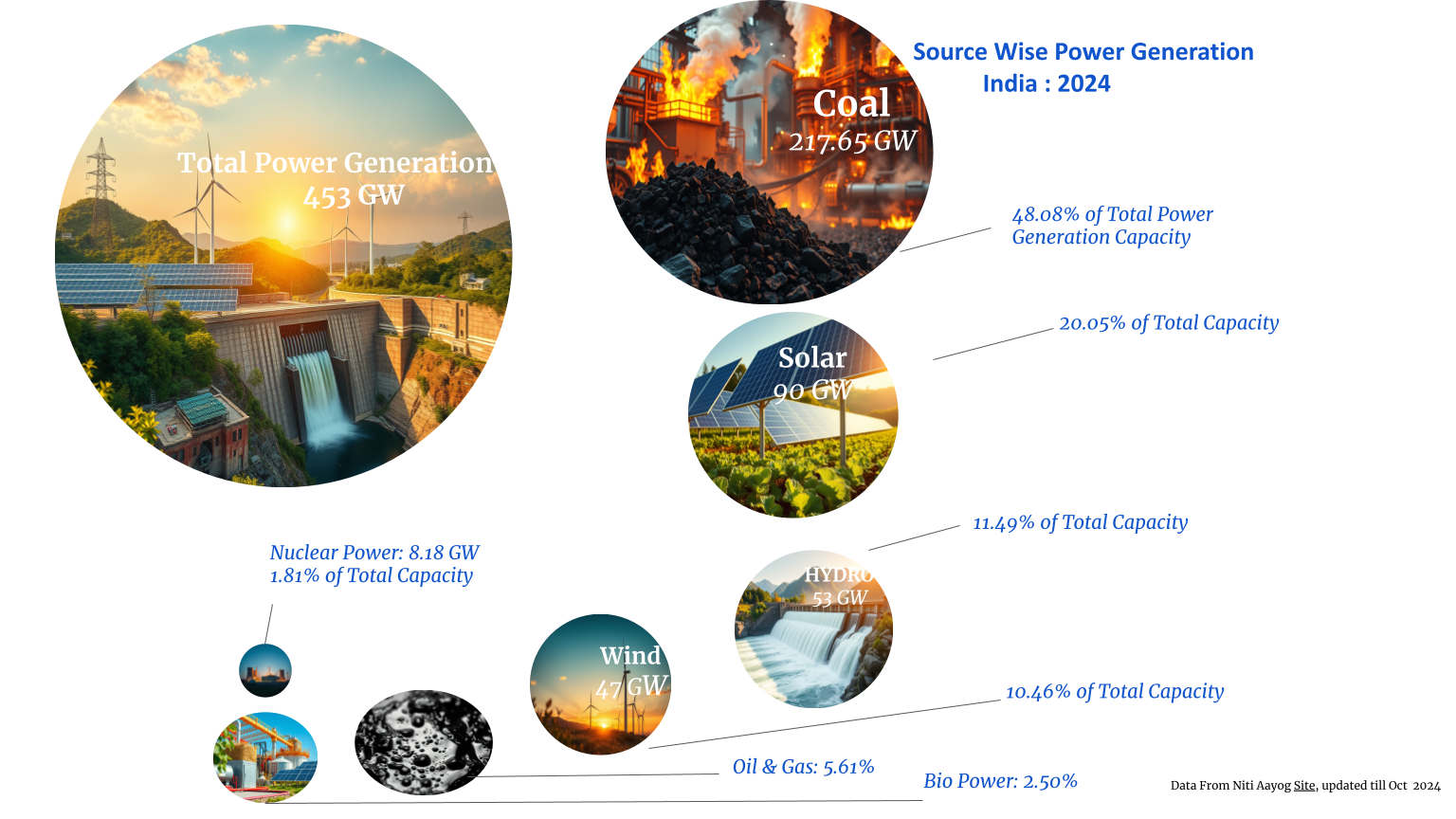
India’s power generation capacity has grown impressively, with an installed capacity increase of around 32% from 2015 to 2024. The total power generation capacity of India rose from 305 gigawatts in 2015 to 453 gigawatts in 2024. The table below displays the different sources used for power generation. It also shows how the capacity increased from 2015 to 2024.

Coal
Coal is still the main source of power generation in 2024 and contributes around 48.08% towards the total capacity of 453 GW. The current power generation through coal is around 217.65 GW. In the last 10 years it has seen a growth of around 17.54%. Central states have been the mainstay for energy production capacity through coal. Uttar Pradesh tops the list followed by Maharashtra, Chattisgarh, Madhya Pradesh and Gujarat.
Oil & Gas
This is the only energy source that has seen a reduction in installed capacity. It’s a logical step for a country like India which doesn’t have large oil resources. This results in reduced imports and foreign reserve savings.
Nuclear
Nuclear energy installed capacity has increased at a rate of 41.52% in last 10 years and it is the third fastest growth rate overall. India has 4 nuclear power plants. Two of them are located in Rajasthan and the remaining two are in Tamil Nadu.
Hydro
The focus on hydro projects has increased. Particularly, attention to run-of-the-mill small hydro projects contributed to achieving a total capacity of around 52 GW. This signifies an increase of approximately 10% in the last 10 years. Himachal Pradesh tops the list followed by Uttarakhand.
Wind
After Solar, the Wind energy has seen the largest increase in capacity built up. The last 10 years have seen an increase of around 21 GW. Gujarat, Karnataka has a lot of Wind power plants followed by Madhya Pradesh and Tamil Nadu.
Solar
The second spot is taken by Solar energy. Solar energy installed capacity has seen unprecedented rise in the last 10 years. It went from about 6.76 GW in 2016 to 90 GW in 2024 and registered mind-boggling 1242% growth in the last decade. Around 20% of total capacity is now from solar energy only. The national solar mission aims to increase this further with 340 power plants in active pipeline.
Bio
Bio power has increased by around 40% in the last 10 years. This is a good source of renewable energy and has all India presence with around 630 active power plants.
Conclusion
A clear trend emerges from the above table. The overall capacity has increased from 305 GW in 2015 to 453 GW in 2024. This trend is going to continue as their is around 200 GW of capacity in pipeline.
Especially the renewable sources capacity has seen a great ramp up in the last 10 years. Meanwhile, the non-renewable sources are more or less stable or have gotten stagnant. In 2015, non-renewable energy sources (oil & gas) made up around 69% of total capacity. This has now been reduced to around 53% in 2024. Rajasthan tops the list of states for renewable energy sources capacity followed by Gujarat.
If you have come this far, we believe you have liked the article. Please click on these links to find articles on India or on energy.


Leave a Reply