World Energy Consumption By Sources In 2023 – Powering a Greener Future
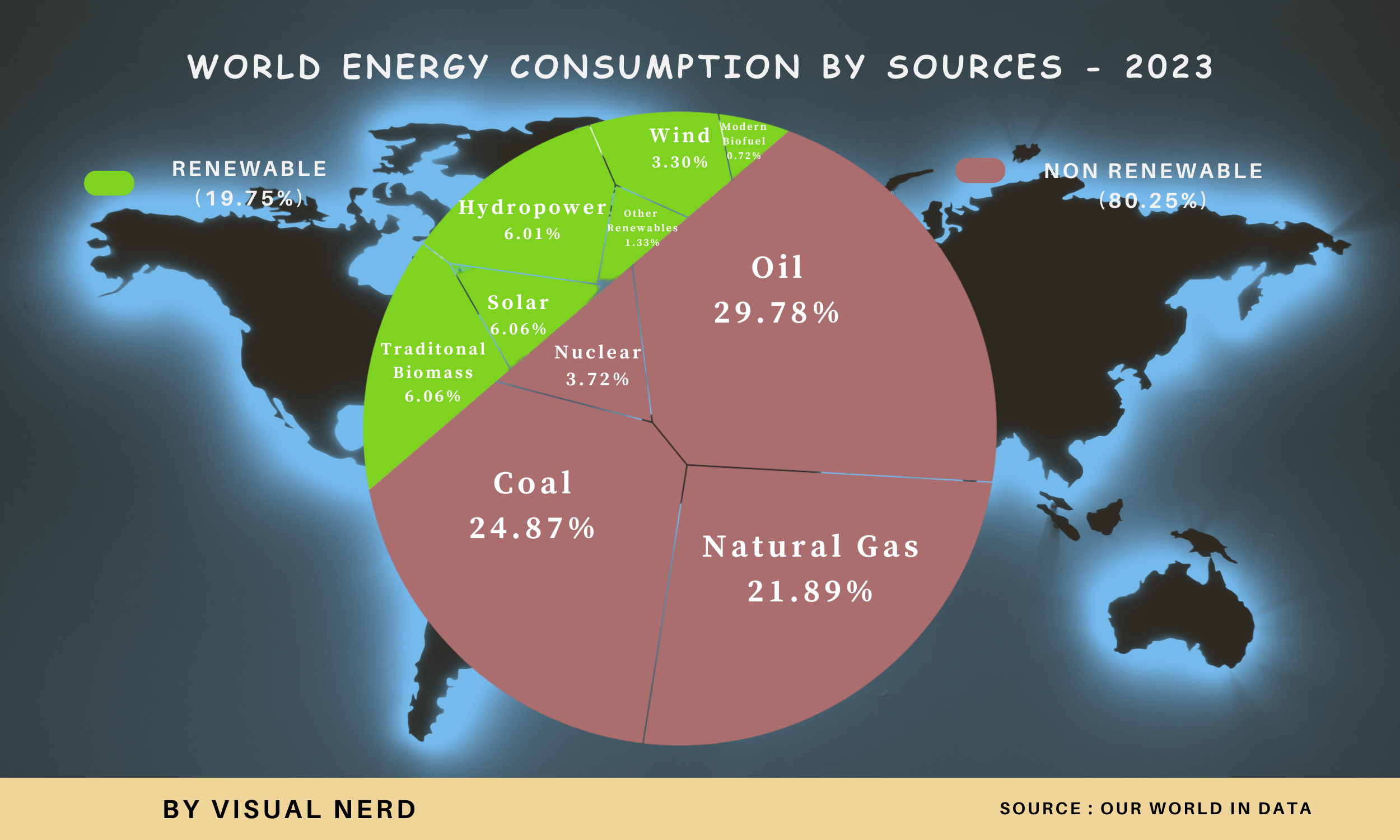
The article illustrates world energy consumption by sources in 2023. Article provides a source wise consumption pattern and also highlight how the transition to renewable energy is happening. The article is based on the data provided in Our World in Data.
Modern civilization is built on energy which powers daily life transportation and industry. Energy sources can be classified into renewable and non-renewable sources. Non-renewable energy sources account for the majority of the world’s energy usage. Although non-renewable energy is still the mainstay of global power generation, environmental concerns about their usage are growing. Technological advancements are driving a rapid increase in the use of renewable energy.
Total Energy Consumption World – By Sources
The below table provides the world energy consumption by sources and its percentage.

Energy Source Types
- Sources of non-renewable energy – The formation of non-renewable energy sources takes millions of years and is limited. Nearly 80% of the energy used worldwide still comes through them. The main categories consist of:
- Petroleum Oil: Mostly used for industrial processes and transportation (automobiles, ships, and airplanes). Oil is the most widely used energy source.
- Coal: is a vital resource for many vital industrial processes like the production of steel. It is also a major source of electricity generation. Despite coal’s high carbon emissions some nations continue to rely heavily on it.
- Natural Gas: Increasingly popular as a cleaner fossil fuel that lessens reliance on coal. Natural gas is generally used for industrial and power generation. Although it is categorized as non-renewable, it is a low-carbon substitute for fossil fuels. It is primarily used to generate electricity.
- . Sources of Renewable Energy – Natural replenishment makes renewable energy sources a sustainable substitute for fossil fuels. They now supply around 20% of the energy required by the world and their proportion is rising quickly. These are important renewable sources:
- Hydro: is the largest renewable energy source. It is widely used in China, Brazil, and Canada. This is due to their extensive river networks and dam infrastructures.
- Wind: Government incentives and technological advancements have made wind energy more popular, especially in China, the USA, and Europe.
- Solar: The widespread adoption of photovoltaic panels has led to the rapid growth in solar energy capacity. The falling cost of these panels contributes significantly. Solar energy is the fastest growing renewable energy source.
- Biomass energy: is derived from organic materials like wood, waste, and other bio-fuels. It is often used to generate electricity, heat, and cook food.
- Geothermal: energy is generally utilized in areas with high geothermal activity. It uses the Earth’s heat to create electricity.
The Transition To Renewable Energy
World energy use by source is going through a rapid transition. The switch from fossil fuels to renewable energy is accelerating due to the below reasons.
✅ Environmental benefits: lowering air pollution greenhouse gas emissions and related health hazards.
✅ Energy security – Reliance on unstable fossil fuel markets is reduced through energy source diversification.
✅ Cost-effectiveness: With ongoing technological advancements energy will be available for a longer period at a reduced cost.
The Future of Energy Consumption Worldwide
Global energy consumption is at a crossroads. Renewable energy adoption is accelerating at a never-before-seen rate thanks to climate policies, technology developments, and sustainability initiatives. Renewable energy sources will surpass fossil fuels by 2050. This change will usher in a new era of more sustainable and clean energy use worldwide.
You have liked the article if you have come this far. Please click on these links to find other articles on energy and environment.


Leave a Reply